Open innovation challenge · Taiz, Yemen
A besieged city of over a million people has nowhere to take its waste.
An estimated 600 tonnes of waste piles up in Taiz every day. With roads cut and the landfill behind front lines, it is piling up in streets and waterways, and residents are burning it. We are inviting engineers, scientists, makers and problem-solvers worldwide to propose solutions that people inside the city can build and run themselves, with what they already have. The challenge is organised by DeepRoot Solutions with the support of the Taiz local authority.
Briefing call on Zoom: Monday 23 November 2026, 6:00 pm Yemen time (15:00 UTC) · Ideas due Monday 30 November, 11:59 pm Yemen time (20:59 UTC)
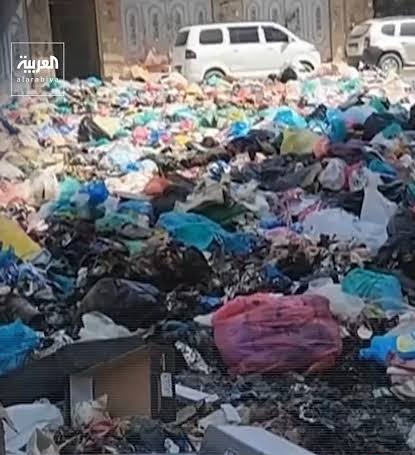
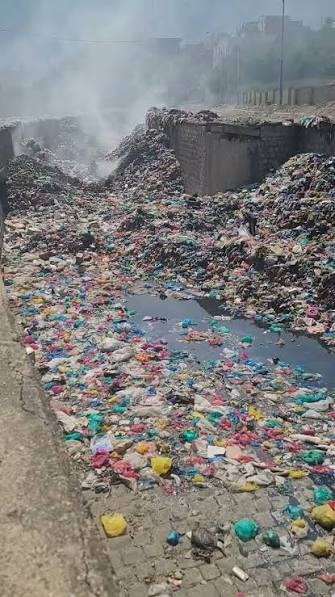
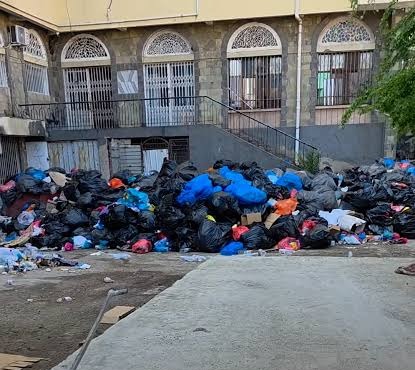
Watch: Taiz today
Short videos filmed in the city. They open on Facebook.
The situation in numbers
1–1.5M
people living in Taiz city (estimates vary)
Al Jazeera, Nov 2026
~600 t
of waste piling up every day
Local estimates; Al Jazeera, Nov 2026
5,025
infectious and respiratory illness cases recorded in October 2026
Taiz Office for Siege Affairs
~50%
fall in the city's water production
Save the Children; UN, Oct 2026
Background
Yemen's third-largest city, besieged by the Houthis for more than a decade
Yemen. The war began when the Houthi movement seized the capital, Sana'a, in 2014 and pushed south. A Saudi-led coalition intervened in support of the Government of Yemen in 2015. More than a decade on, Yemen remains one of the world's largest humanitarian crises, and public services, including sanitation, are chronically underfunded.
Taiz. When the Houthis failed to take Taiz in 2015, they besieged it instead. They seized the city's main entrances and the surrounding heights, closed its roads and restricted the movement of people and goods, while shelling the city from the hills. A five-minute drive across the front line became an eight-hour journey over mountain roads. After years of siege, the Government of Yemen was able to open two main roads into the city: one through Al-Turbah to Aden, the temporary capital, and one through Al-Kadaha to Mokha, on Yemen's Red Sea coast, which was then under Government control. In June 2024 the Houthis reopened one road, Al-Qasr, allowing small cars and pedestrians to cross to Ibb and Sana'a, which are under Houthi control.
Autumn 2026. In September 2026 the Houthis cut the road to Taiz through Al-Kadaha and took Mokha. In October they seized al-Turbah, cutting the city's last lifeline to Aden and completing its encirclement. They have set up new checkpoints across the western countryside and are stopping trucks carrying food, fuel and medicine from entering the city. The UN says the health system is close to collapse, water production has halved, and the cost of trucked water has tripled.
Where Taiz is
The roads into Taiz city
Road routes are drawn schematically and locations are approximate. Boundaries: geoBoundaries (CC BY 4.0).
The waste crisis
Why the waste can't leave the city
The Houthis have cut off both dumpsites. Since 2015 the Houthis have blocked access to the city's main landfill at Mafraq Shar'ab, in Houthi-held territory outside the city. Taiz then began using a temporary dumpsite closer to the city, at Al-Saleh Gardens near Wadi Al-Dabab, which was declared the governorate's official landfill in 2017. Since early October 2026 the Houthis' advance west of the city has cut off this site too: sanitation workers report snipers nearby and have come under fire trying to unload, and the deputy governor says Houthi forces are turning back waste trucks before they can reach it.
Fuel is scarce. Shortages have slowed collection across the city, and cleaning initiatives have also lost funding.
Waste is building up where people live. It is piling up along main roads, in storm drains and in waterways such as the al-Saeed stream, through dense residential neighbourhoods. Medical waste is also piling up in hospital grounds, including the courtyard of Al-Jumhuri Hospital, creating a serious health risk for patients and staff.
Burning is spreading a second hazard. With no other option, residents and workers set the piles alight, covering neighbourhoods in toxic smoke. Health officials warn of respiratory disease, and dengue and cholera cases are rising.
The challenge
How might the people of Taiz safely reduce, treat and dispose of hundreds of tonnes of waste a day, using only the skills, materials and equipment already inside a besieged city?
Design constraints
Built from what's there
Almost nothing can be brought in. Solutions should rely on materials, tools and spare parts that can be found in local markets and workshops.
Little fuel or power
Diesel and electricity are scarce and expensive. Low-energy or energy-producing approaches are favoured.
Run by local people
Residents, local authority staff and specialists inside the city must be able to build and operate it, guided remotely.
Safe first
Ideas must not create new health, fire or pollution risks, and must work in a dense city where people live close to the waste.
Any idea is welcome. For example:
How it works
From idea to action
-
Step 1
Register
Sign up through the Zoom form below. You'll receive a link to join the briefing call.
-
Step 2
Join the briefing
Hear from people in Taiz about the situation on the ground and how to submit ideas. Monday 23 November, 6:00 pm Yemen time (15:00 UTC).
-
Step 3
Submit your idea
Send a two-page concept note or a short video by Monday 30 November 2026, 11:59 pm Yemen time (20:59 UTC). How to submit
-
Step 4
Shortlist and present
Shortlisted teams present their ideas. Selected ideas are developed with specialists in Taiz and taken forward for implementation.
Who should take part
Engineers, environmental health and public health specialists, waste-management practitioners, chemists, makers and inventors, urban planners, designers, students, and the Yemeni diaspora. No prior knowledge of Yemen is needed.
Submit
How to submit your idea
What to send
A two-page concept note or a short video, in English or Arabic. Explain the idea or solution you propose, and share any links, documents or materials about it, including examples from other places where it has been used.
Who can submit
Anyone, as an individual or a team. Ideas will be implemented locally by people in Taiz, so you don't need to be able to carry them out yourself.
How to send it
Email your concept note, or a link to your video, to info@deeproot.consulting with the subject “Taiz Waste Challenge”. Share videos as a download link (for example WeTransfer, Google Drive, Dropbox or an unlisted YouTube video) rather than as an attachment.
Deadline
Monday 30 November 2026, 11:59 pm Yemen time (20:59 UTC).
By submitting an idea, you agree that it may be shared freely with residents, authorities and organisations in Taiz to help put it into practice.
How ideas will be judged
-
1. Buildable locally
Can be built and run with the materials, tools and skills already inside the city.
-
2. Safe
Creates no new health, fire or pollution risks in a dense city.
-
3. Low fuel and power
Needs little diesel or electricity, or produces energy.
-
4. Low cost
Affordable for households, neighbourhoods and the local authority.
-
5. Quick to start
Can begin making a difference within weeks, not years.
What happens to selected ideas
Shortlisted teams will be invited to present their ideas on a date announced after the deadline. Selected ideas will be developed further with specialists in Taiz, and DeepRoot Solutions will work with the Taiz local authority, local civil society organisations and international development partners to get them implemented.
FAQ
Questions
Does it cost anything to take part?
No. Taking part is free.
Do I need to know Yemen?
No. What matters is relevant experience in engineering, waste management or environmental work, especially in crisis settings. The briefing call will give you the local context.
Will the briefing call be recorded?
Yes. If you can't attend, email info@deeproot.consulting to request the recording. It will not be posted online.
Can I take part as a team?
Yes. Ideas can be submitted by individuals or by teams of any size.
About the organiser
DeepRoot Solutions
DeepRoot Solutions is a sustainable development firm founded in 2016 and headquartered in Aden, working across Yemen. It blends deep local knowledge with global best practice through three lines of work: Advisory, Programme Solutions and Analytics, in peace and stability, governance and economic development. Its teams have worked in Taiz for years, including on peacebuilding and youth-led mediation, and it partners with local authorities, communities, the private sector and international organisations to turn ideas into action on the ground.
Register for the briefing call
Monday 23 November 2026 · 6:00 pm Yemen time (15:00 UTC) · Online via Zoom · Free to join
After you register, Zoom will email you a personal link to join.